 EN
EN

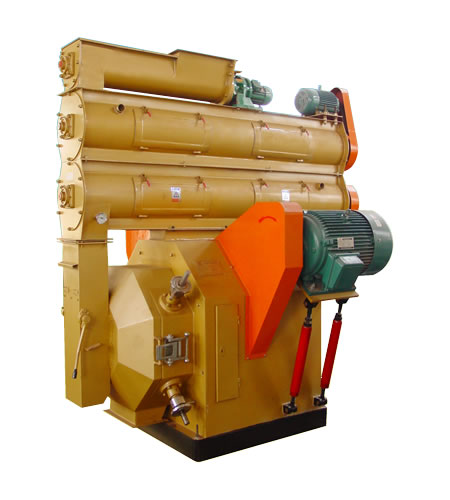
Optimize Raw Material Preparation for Feed Pellet Machine Performance
Particle Size Distribution and Grinding Degree Impact on Binding Capacity
Particle size directly governs binding capacity in the feed pellet machine. A uniform grind with moderate fineness—typically a geometric mean diameter of 0.6–0.8 mm—maximizes surface area for natural binder activation and steam penetration, without compromising throughput. Particles finer than 0.5 mm increase die bridging and energy demand; coarser particles leave voids that weaken structural integrity. Grinding equipment must be calibrated regularly: variations as small as 0.1 mm can measurably affect pellet durability and die wear.
Moisture Content Control and Impurity Management Pre-Conditioning
Moisture serves dual roles—as a plasticizer during compression and a heat-transfer medium during conditioning—making precise control essential. Raw materials should enter the system at 12–14% moisture to support starch gelatinization while avoiding sticky mash that clogs dies or causes roll slip. Below this range, binding suffers; above it, pellets soften and break easily. Impurities—including stones, metal fragments, and oversized stalks—must be removed before grinding using pre-cleaning screens and magnetic separators. This protects rollers and dies from damage, stabilizes conditioner feed flow, and ensures consistent moisture and temperature distribution across batches—key to uniform pellet formation and steady production rates.
Feed Formulation Effects: Fiber, Starch, and Molasses Interactions in Pellet Binding
Pellet durability hinges on how fiber, starch, and molasses interact under thermal and mechanical stress. High-fiber ingredients (e.g., hulls, bran) resist compression and often yield brittle pellets unless balanced by starch-rich grains—such as corn or wheat—that gelatinize readily during conditioning. Molasses enhances hardness and reduces fines even at low inclusion levels (5–10%), thanks to its sugar-based binding action. But exceeding 12% can cause excessive stickiness, lowering throughput and triggering roll slippage. Optimal formulation adjusts fiber-to-starch ratios according to die compression ratio and available steam. For instance, feeds exceeding 12% fiber may require either particle size reduction or supplemental binders to achieve >90% pellet durability.
Fine-Tune Steam Conditioning for Optimal Starch Gelatinization
Humidity–Temperature–Pressure Balancing to Maximize Binder Activation
Steam conditioning drives starch gelatinization and protein denaturation—both critical for binding strength and nutrient digestibility. Success depends on tightly balancing humidity, temperature, and pressure. Conditioned mash moisture should target 15.5–17%; above 17%, cohesion declines and die slippage risk rises. Temperature must reach 80–85°C—the gelatinization threshold for most cereal starches—while staying below 90°C to avoid nutrient degradation and binder breakdown. Steam pressure must be controlled to ensure even moisture absorption; excessive pressure creates internal particle stress, leading to cracks or coke buildup in the die. Because high-starch and high-fiber formulas respond differently to steam, parameter sets must be tailored per formulation—not applied universally. Consistent balancing across these variables ensures uniform binder activation and durable, low-fines output.
Dwell Time and Conditioning Uniformity: Preventing Over- or Under-Conditioning
Dwell time determines whether starch fully gelatinizes before entering the die. Less than 30 seconds typically yields under-gelatinized particles—only ~20% of total gelatinization occurs during pelleting itself—compromising hardness and increasing fines. Over-conditioning extracts natural oils, reduces lubrication, and elevates frictional heat in the pressing zone, accelerating die wear. Paddle angle adjustments offer a practical method to fine-tune retention time in single- or double-conditioner systems. Equally important is uniform steam distribution: uneven application creates zones of over-moistened and under-cooked material, resulting in inconsistent density, higher fines, and accelerated mechanical wear. Monitoring mash temperature at multiple points—and adjusting dwell time accordingly—ensures stable, repeatable conditioning performance.
Adjust Mechanical Parameters of the Feed Pellet Machine
Die Selection: Aperture Size, Compression Ratio, and Roller–Die Gap Calibration
Die selection is foundational to granulation efficiency. Aperture size dictates pellet diameter and influences throughput: smaller holes increase compression but reduce capacity. Compression ratio must align with formulation—higher ratios suit fibrous feeds; lower ones work better for starchy, easily compressible materials. The roller–die gap controls feed entry into the pressing zone: too wide yields loose, low-density pellets; too narrow increases friction, heat, and premature wear. These three parameters must be calibrated in concert, not in isolation. Operators should verify die temperature and pressure regularly and adjust the gap dynamically to sustain stable output. Proper calibration improves pellet consistency, cuts energy use by up to 12%, and extends die life by 25–40%.
Operational Dynamics: Tangential Velocity, Spindle Speed, and Pressing Zone Stability
Tangential roller velocity and spindle speed jointly define pressing zone stability—the critical region where feed is compacted and extruded through the die. Higher tangential velocity boosts throughput but shortens effective compression time, risking poor binding. Spindle speed must synchronize precisely with die rotation; mismatched speeds induce vibration, uneven density, and accelerated bearing wear. Real-time load sensors enable dynamic feed rate adjustment to maintain optimal pressure in the pressing zone—even as ingredient moisture or particle size fluctuates. Skilled operators use these levers proactively, not reactively, to match machine behavior to formulation changes. When properly balanced, the system runs smoothly at peak capacity, delivering high-integrity pellets without jamming, overheating, or excessive fines.
Ensure Long-Term Granulation Efficiency Through Maintenance and Training
A robust preventive maintenance program is indispensable for sustaining feed pellet machine performance. Systematic upkeep prevents unplanned downtime, preserves equipment integrity, and supports consistent output quality. Key actions include:
- Die and Roller Checks: Inspect weekly for wear patterns; replace components showing >0.5 mm deformation to maintain pellet density and minimize fines.
- Lubrication Protocols: Apply food-grade lubricants to bearings every 200 operational hours to reduce friction-related energy waste and thermal stress.
- Vibration Analysis: Use sensor-based monitoring to detect misalignment early—preventing an estimated 37% of mechanical failures, per Feed Tech Journal (2023).
Operator training reinforces technical maintenance by closing knowledge gaps responsible for 28% of production losses. Effective programs emphasize:
- Condition Monitoring: Teaching staff to recognize abnormal sounds, vibrations, or temperature spikes that signal emerging issues before they escalate.
- Emergency Protocols: Standardizing responses to jams or motor overloads cuts average resolution time by 65%.
- Cleaning Procedures: Enforcing lockout-tagout (LOTO) compliance during sanitation mitigates contamination risks and ensures worker safety.
Integrating predictive maintenance technologies with quarterly skill refreshers sustains granulation efficiency above 92% year-round—reducing annual operational costs by $740,000 for mid-sized feed mills.
FAQ
What is the ideal particle size for feed pellet machine performance?
The ideal geometric mean diameter is 0.6–0.8 mm, as it ensures optimal binding capacity and steam penetration without negatively affecting throughput.
Why is controlling moisture content important in feed pellet manufacturing?
Moisture acts as both a plasticizer and a heat-transfer medium. Controlling it between 12–14% supports starch gelatinization, avoids sticky mash, and ensures consistent pellet formation.
How does fiber-to-starch ratio impact pellet durability?
A proper balance between fiber and starch is essential. High-fiber feeds require balanced starch and molasses to improve durability, as excessive fiber can lead to brittle pellets.
What role does steam conditioning play in pellet manufacturing?
Steam conditioning facilitates starch gelatinization and protein denaturation, essential for strong binding and nutrient digestibility. Maintaining optimal temperature, pressure, moisture, and dwell time is critical.
How can feed mills sustain granulation efficiency over time?
Sustaining efficiency involves preventive maintenance, operator training, lubrication, and predictive technologies, which collectively minimize downtime and mechanical failures.
Table of Contents
- Optimize Raw Material Preparation for Feed Pellet Machine Performance
- Fine-Tune Steam Conditioning for Optimal Starch Gelatinization
- Adjust Mechanical Parameters of the Feed Pellet Machine
- Ensure Long-Term Granulation Efficiency Through Maintenance and Training
-
FAQ
- What is the ideal particle size for feed pellet machine performance?
- Why is controlling moisture content important in feed pellet manufacturing?
- How does fiber-to-starch ratio impact pellet durability?
- What role does steam conditioning play in pellet manufacturing?
- How can feed mills sustain granulation efficiency over time?

