 EN
EN

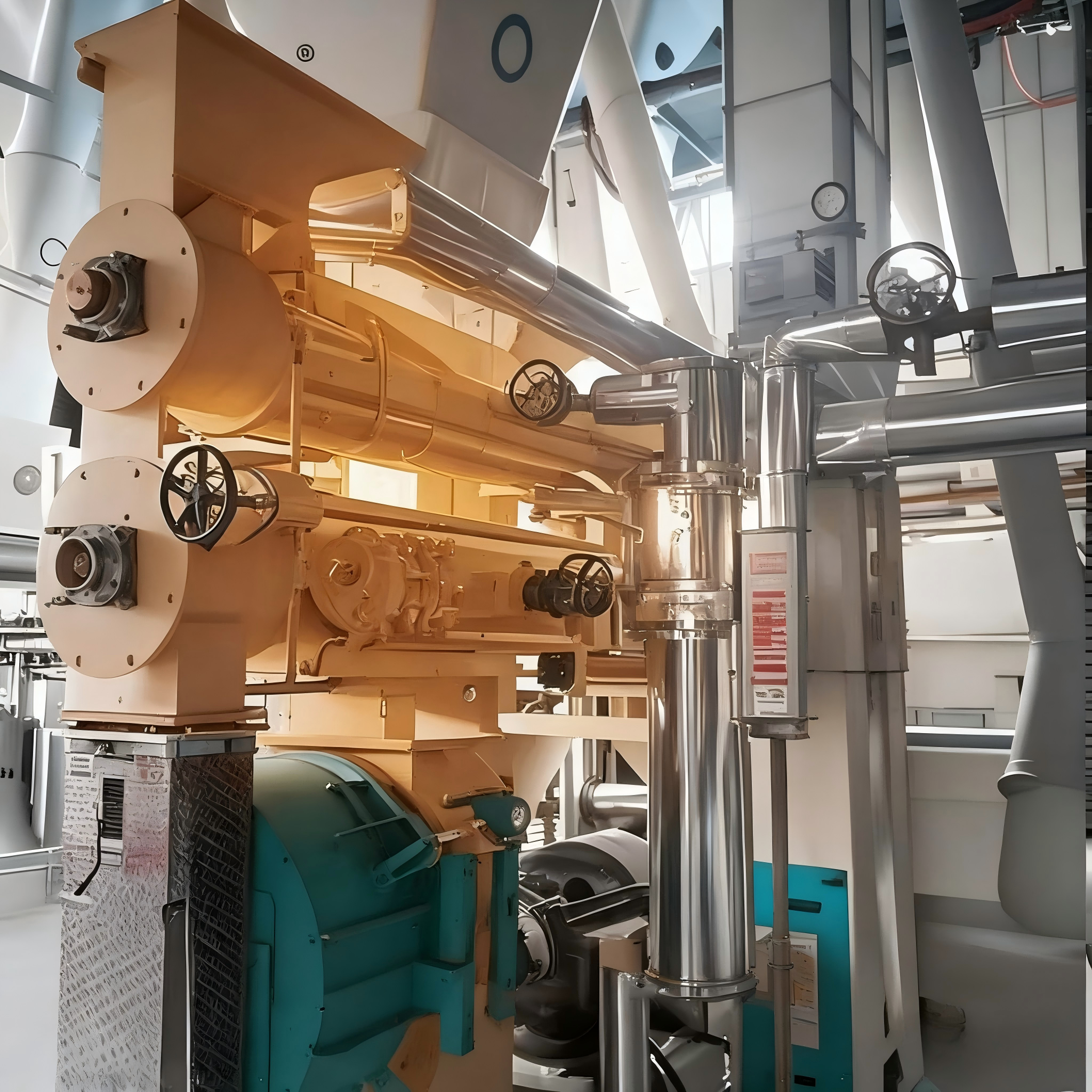
Ring Die Feed Pellet Machines: The Gold Standard for High Pellet Forming Rate
Why Ring Die Design Delivers >95% Pellet Forming Rate Consistently
Ring die feed pellet machines can reach pellet forming rates above 95%, thanks to their carefully engineered construction. With its circular design, these machines spread pressure evenly across the material as it moves through those evenly spaced holes, which helps create stronger pellets without structural weaknesses. Several key elements contribute to this impressive performance. First, the compression ratio needs to be just right usually somewhere between 1:8 and 1:12. Then there's the tiny gap between the die and rollers, typically measuring around 0.1 to 0.3 millimeters. And finally, the die surfaces must be sufficiently hardened (around 55 to 60 HRC) so they don't wear down over time, which would otherwise cause inconsistencies in pellet density. All these factors working together make ring die technology so effective for high quality pellet production.
The continuous ring motion ensures steady material flow, contrasting sharply with flat die systems where intermittent pressure causes micro-fractures and inconsistent density. When properly maintained—including regular gap calibration and die surface inspection—ring die machines sustain >95% forming rates for over 2,000 production hours.
Leading Feed Pellet Machine Performance Benchmarks
Industrial-grade ring die pelletizers deliver measurable advantages in throughput, durability, and operational efficiency. Heavy-duty models achieve 20% higher throughput than equivalent flat die machines while reducing energy use per ton. When processing common livestock feeds like soybean meal or corn gluten, they consistently produce pellets with:
- Durability indexes >97% (vs. 85–90% for flat die alternatives)
- Fines generation below 5% during handling and transport
- Moisture retention within ±0.5% of target specifications
Operators report 15–30% longer die lifespan when processing abrasive materials—making ring die systems the preferred solution for high-volume feed mills requiring uninterrupted output.
Key Mechanical Parameters That Maximize Feed Pellet Machine Efficiency
Die–Roll Gap Precision (0.1–0.3 mm) and Its Direct Impact on Pellet Density and Formation Rate
Getting the right die-roll gap between 0.1 and 0.3 mm makes all the difference for pellet strength since it controls how compression forces spread out during processing. When the gap is tighter than 0.2 mm, we see material density go up around 15 to 20 percent according to those computer models called FEM simulations. But if the gap gets too wide over 0.25 mm, things start going wrong fast because rollers begin slipping instead of compressing properly. What kind of feedstock we're working with really matters for setting these gaps right. Materials with lots of fibers need more space between the rolls otherwise motors just burn out trying to push through. Real world testing shows keeping gaps under 0.3 mm helps maintain pellet production rates above 94 percent most of the time, which cuts down on wasted energy somewhere around 9 percent for every ton processed.
Ring Die Specifications: Compression Ratio, Hole Geometry, and Surface Hardness Optimization
The combination of compression ratios between 5 to 1 and 12 to 1 along with specific tapered hole designs plays a big role in how durable feed pellets turn out. For livestock grade products, most manufacturers aim for around 8 to 10 to 1 compression using countersunk holes which really helps bind materials together. Some studies have shown that adding molasses as a binder can actually push durability up to about 94%, according to research looking at how starches behave when heated and what makes binders effective. The surface hardness of dies should be somewhere between HRC 55 and 60 to reduce wear over time, especially important when dealing with tough stuff like rice bran that tends to wear equipment down faster. Putting all these factors together means companies save roughly hundreds of thousands each year on replacements while still keeping formation rates above 95% even when working with different ingredient mixes.
Process Integration Strategies to Boost Feed Pellet Machine Output Quality
Steam Conditioning, Grinding Uniformity, and Moisture Control as Critical Pre-Pelleting Levers
When we get those steam conditioning settings right around 80 to 90 degrees Celsius with about 16 to 18 percent moisture content, the starches start to gelatinize which helps things bind better. This actually makes the pellets last longer too, somewhere between 15 and 20 percent improvement in durability while cutting down on those annoying fines. At the same time, getting consistent grinding results matters a lot. We need to calibrate those screens just right so most particles stay under 600 microns for even compression later on. Throw in tight moisture control during mixing, keeping it within half a percent either way, and these three factors together stop die clogging issues and speed up how fast pellets form because everything flows uniformly through the system. Let's not forget though - if particle sizes vary too much, pellet stability drops significantly, sometimes as much as 30 percent according to some tests. That's why adjusting things before pelleting remains so important for maintaining consistent production quality.
Real-Time Monitoring and Feedstock Adaptation for Sustained High Pellet Forming Rate
Tracking things like how particles spread out, changes in temperature across different areas, and moisture content lets the system make quick fixes when there are variations in raw materials. When the equipment notices something off about the corn or soybean meal mix, it will adjust the steam coming in and change the pressure on the dies. This keeps the forming rate above 94 percent even when ingredients aren't exactly what they should be. People who work with these systems have found that looking at live data helps cut down wasted energy around 12 percent and reduces time spent waiting for repairs by about a quarter. Experience shows that fixing problems before they happen works better than just reacting after things go wrong if we want our pellets to come out consistently good every time.
FAQ Section
-
What is the advantage of ring die feed pellet machines over flat die systems?
Ring die machines offer better consistency and stronger pellet formation due to continuous pressure application, unlike flat die systems that apply pressure intermittently resulting in micro-fractures. -
How does die-roll gap affect pellet forming rate?
The die-roll gap directly impacts pellet density and strength; maintaining a gap between 0.1 and 0.3 mm ensures optimal compression efficiency and minimizes wasted energy. -
Why is steam conditioning important in feed pellet production?
Proper steam conditioning aids in starch gelatinization, thus improving pellet durability and minimizing fines during handling. -
How can real-time monitoring improve pellet machine output?
Real-time monitoring allows quick adjustments to feedstock variation, maintaining high forming rates and reducing wasted energy.

