 EN
EN

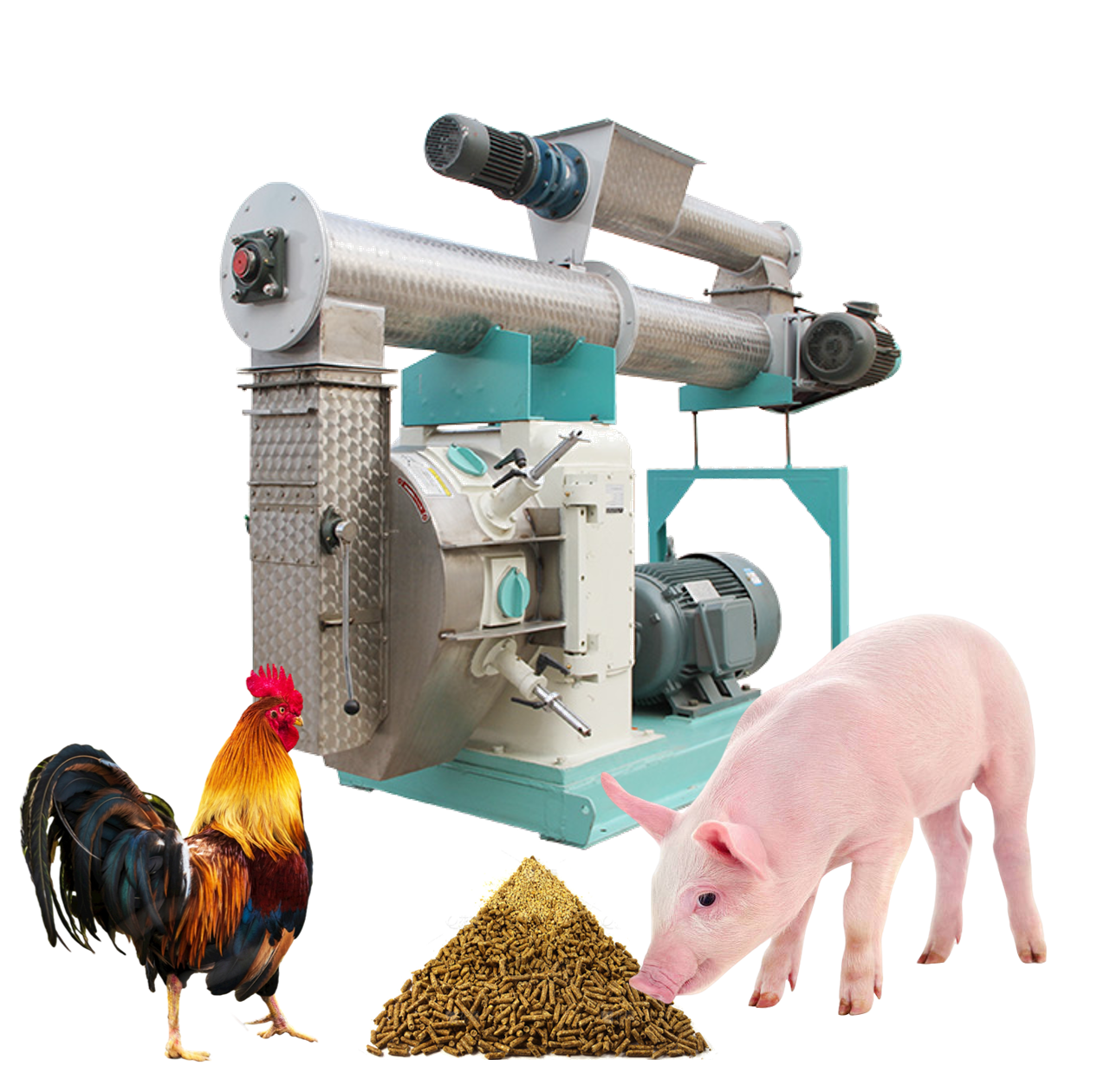
Top Granulator Models for Medium-Scale Feed Production
SZLH250–SZLH508 Ring Die Granulators: Optimal Capacity and Reliability at 500–1,000 kg/h
Ring die granulators really shine for medium scale feed operations between 400 and 1,500 kg per hour when it comes to keeping production consistent. Take the SZLH series models ranging from 250 to 508 for instance they can handle output volumes from 500 up to 1,000 kg per hour while maintaining around 85 percent efficiency or better. These machines work by squeezing materials through those tough circular dies which creates strong, evenly sized pellets that actually help animals convert their feed more efficiently. What makes them stand out is the dual gear system that cuts down on power usage significantly bringing energy costs down to somewhere between 15 and 18 kWh per ton compared with other options on the market. Farmers who run these units regularly notice something interesting too when making standard feeds for chickens or pigs the pellets stay intact over 95 percent of the time meaning much less waste happens during transportation. Maintenance crews also appreciate how these newer models spend about 30 percent less time dealing with unexpected breakdowns thanks to stronger roller bearings and parts that are easier to reach when servicing the equipment.
When to Consider Flat Die Granulators: Niche Applications and Throughput Trade-Offs
Flat die granulators suit specialized operations prioritizing flexibility over volume. Consider them for:
- Small-batch production (<500 kg/h) of aquaculture or organic feeds
- Facilities with frequent recipe changes requiring quick die swaps
- Budget-constrained operations where lower upfront costs outweigh throughput limits
Vertical compression designs run into problems when dealing with high fiber content stuff like alfalfa, which can cause all sorts of clogging issues and lead to inconsistent pellet densities throughout production runs. Most machines just can't handle much more than about 400 kilograms per hour unless someone goes ahead and invests in some serious motor upgrades. What's worse, the pellets themselves tend to be roughly 20 percent less durable compared to what comes out of ring die systems. When working with particularly abrasive materials, maintenance becomes a real headache too. Dies need replacing every 6 to 8 months instead of the usual 18 plus months we see with ring die technology. All these limitations mean that flat die models really only work well in very specific situations where scaling up operations isn't going to be part of the equation anytime soon.
Key Technical Specifications That Impact Granulator Performance and Scalability
Motor Power (22–90 kW) and Its Role in Sustained Throughput and Energy Efficiency
The motor power basically determines how well a granulator can handle tough stuff like dense or fibrous materials while still hitting production targets. Most machines that run around 500 to 1,000 kg per hour need somewhere between 30 and 55 kW motors. This range helps strike a balance between energy use, which usually comes out to about 8-12 kWh per ton processed, and keeping the output steady. When motors aren't powerful enough, they tend to break down faster because materials get stuck inside. On the flip side, going too big on motor size just burns through more money without actually increasing what gets produced. Getting the right motor size makes all the difference for pellet quality consistency. Feed mill operators report seeing roughly 18 to 25 percent fewer unexpected shutdowns when their equipment is properly sized for the job at hand.
Conditioning System Design: Steam Control, Residence Time, and Moisture Uniformity for High-Quality Pellets
Getting the right amount of steam injected into the process matters a lot for proper starch gelatinization. We're talking about adding around 3 to 6 percent moisture, and letting it sit in retention chambers for about 15 to 30 seconds. When moisture spreads evenly throughout the material, which can happen with counterflow mixers or those multi-zone conditioning systems, we see a significant drop in pellet fines sometimes as much as 40%. Plus, the feed becomes easier to digest. Automated systems with steam valves and moisture sensors help keep things consistent between different batches of ingredients. This is especially important when dealing with protein rich feeds because if the hydration isn't even, those pellets tend to break apart when they cool down later in the process.
Critical Operational Factors Beyond Capacity: Ensuring Long-Term Granulator Fit
Raw Material Compatibility: Managing Fiber-Rich or Variable-Composition Feeds
What goes into the granulator really affects how well it works. When materials have too much fiber content over around 12%, this creates extra friction against the dies which wears them down faster. That means operators need to do special prep work before processing these materials. Agricultural waste products often come with all sorts of different stuff mixed together, so the granulators need adjustment capabilities for varying compression needs. According to research published last year, getting the material handling wrong can shorten die life by about 30% and make those pellets less durable overall. If someone wants their production run smooth and predictable, they should pay close attention to what kind of feedstock enters the system first.
- Pre-process fibrous materials through finer grinding
- Maintain moisture levels within ±2% tolerance
- Use wear-resistant alloy dies for abrasive ingredients
Feeding Mechanism and Particle Size Distribution: How They Influence Die Wear and Pellet Durability
Uniform Particle Size Distribution (PSD) is critical for stable pellet formation. Optimal particle sizes (0.5–1.5 mm) ensure even die filling, reducing pressure fluctuations by 15–20%. Volumetric versus gravimetric feeding systems present key trade-offs:
| Feeding Type | Die Wear Impact | Pellet Durability |
|---|---|---|
| Volumetric | Higher variance | ±8% consistency |
| Gravimetric | Consistent pressure | ±3% consistency |
| Inconsistent PSD increases localized die stress, accelerating wear patterns. Research published in the Feed Production Journal (2023) indicates proper particle sizing extends maintenance intervals by 200–400 operating hours while improving pellet hardness by 18%. Implement pre-grinding sieves and real-time monitoring systems to sustain operational efficiency. |
FAQs
What are the main advantages of ring die granulators?
Ring die granulators offer consistent production, energy efficiency, and produce durable pellets that minimize waste during transportation.
When should flat die granulators be considered?
Flat die granulators are ideal for specialized operations that prioritize flexibility, small-batch production, or have budget constraints.
What are critical factors affecting granulator performance?
Key factors include motor power, conditioning system design, raw material compatibility, and feeding mechanism.
How does particle size distribution affect pellet durability?
Uniform particle size ensures stable pellet formation by reducing pressure fluctuations and extends maintenance intervals.

