 EN
EN

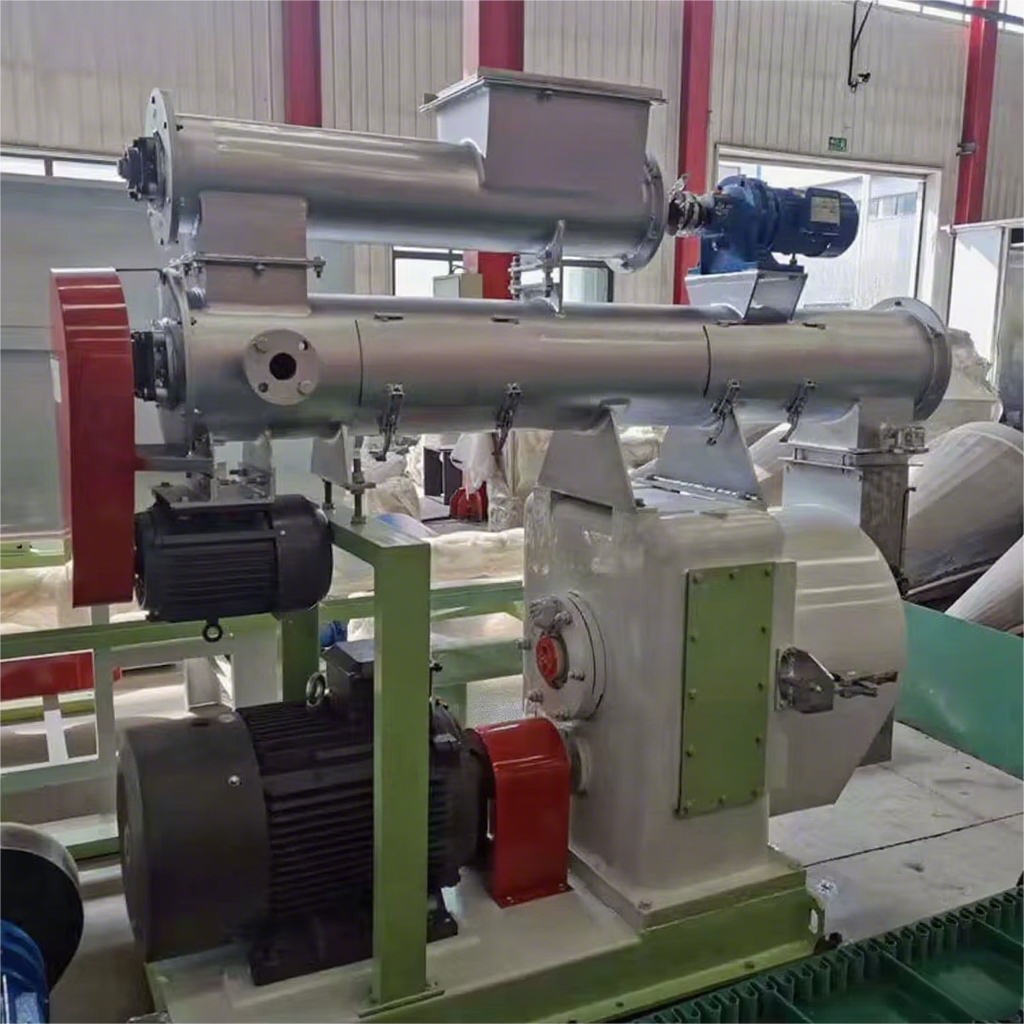
Align Feed Pellet Machine Capacity with Farm-Scale Production Needs
Calculate Daily Feed Demand by Livestock Type, Growth Stage, and Stocking Density
Start looking at what different animals eat at various stages of their lives. For example, dairy cows when they're producing milk need around 15 to 25 kilograms each day. Young chickens will eat about 120 to 180 grams depending on how old they are. And if someone has 1,000 pigs getting ready for market, those animals collectively go through approximately 2.8 to 3.5 metric tons of feed every single day. When calculating total feed needs, take the amount each animal eats and multiply it by how many there are in the group. But don't forget about space considerations either. Poultry farms that pack birds closely together tend to see an extra 10 to 15 percent increase in feed consumption simply because the birds have less opportunity to peck around naturally. Getting these details right helps avoid buying a feed pellet machine that's either too big or too small for the job, which means better matching what gets produced with what actually gets used out in the fields.
Convert Demand to Required Hourly Output (e.g., 900–1,100 kg/h) with 15–20% Operational Safety Margin
To figure out what kind of hourly output is actually needed, start by looking at daily requirements against normal farm operation hours. Take a typical scenario where about 20 tons of swine feed are required each day over roughly 16 working hours. The math works out something like this: divide 20,000 kilograms by 16 hours then multiply by 1.2 for safety, which gives around 1,500 kg per hour. That extra 15 to 20 percent buffer covers unexpected things like when maintenance needs attention, formulas get adjusted mid-cycle, or there's a sudden spike in demand that happens all too often during busy periods. When picking equipment, go for models that can handle more than just the calculated minimum. This helps prevent those frustrating production slowdowns and keeps machinery running longer without breaking down under pressure.
Compare Feed Pellet Machine Types and Key Technical Specifications
Ring Die vs. Flat Die Feed Pellet Machines: Throughput, Pellet Quality, and Suitability for Large-Scale Poultry and Swine Operations
Most commercial poultry and swine farms rely on ring die pellet machines as the go-to equipment for feed production. These machines handle around 900 to 1,100 kilograms per hour and create dense pellets with smooth surfaces where fine particles stay under 5%, which is really important for automated feeding setups. Flat die models simply can't match this performance, typically maxing out at less than 500 kg/h and struggling to reach over 90% durability when dealing with those tough fibrous swine feeds. What makes ring die systems worth the initial investment? They last longer between replacements and consume less energy per ton of feed produced. The extra money spent upfront usually pays off handsomely over time thanks to better overall efficiency.
Essential Technical Parameters: Die Diameter, Motor Power (75–160 kW), Integrated Cooling, and PLC-Controlled Automation
Four specifications determine sustained performance at scale:
- Die Diameter: Ø8 mm is recommended for high-volume grain-based formulations, directly supporting throughput stability
- Motor Power: Poultry rations perform optimally with 75–110 kW motors; swine diets—denser and more abrasive—require 120–160 kW
- Integrated Cooling: Mandatory for preserving pellet integrity during extended 8-hour shifts; prevents thermal degradation and post-pelleting crumbling
- PLC (Programmable Logic Controller) Automation: Enables precise control of conditioning, compression, and cutting parameters—maintaining pellet density within ±2% variance and supporting remote diagnostics
Farms deploying PLC-integrated pellet mills report an 18% reduction in unplanned downtime annually compared to manually managed systems.
Prioritize Long-Term Reliability and Commercial-Grade Support
Durability Indicators: Hardened Alloy Dies, Wear-Resistant Rollers, and Mean Time Between Failures (MTBF) Data
Feed manufacturing at scale requires equipment designed to handle non-stop operation. The alloy dies need to be hardened against wear from rough grains and mineral additives, and the rollers must maintain consistent pressure throughout long production runs. These machines typically last well over 10,000 hours in actual use. When it comes to reliability metrics, MTBF or Mean Time Between Failures stands out as a key indicator. Real world testing shows that quality pellet machines often hit around 2,000 hours between breakdowns, which means about 30 to 40 percent fewer unexpected stoppages compared to cheaper alternatives. Take mills handling 5 ton batches for example. With proper hardened parts installed, these systems can run smoothly for nearly 18 months before needing significant maintenance work.
Supplier Credibility: Local Service Network, Spare Parts Inventory, and <24-Hour Response Commitment for Large-Farm Clients
When it comes to reliability, hardware is just part of the equation. What really matters is how quickly suppliers can respond when things go wrong. Look for vendors who have certified techs nearby, preferably within about 100 miles away. Check if they actually keep spare parts on hand at their location for critical components like dies, rollers, and those drive motors everyone seems to break down eventually. Farms need something better than just promises too. Big operations lose around $740 every single hour their equipment sits idle, according to research from Ponemon Institute back in 2023. Service contracts should definitely cover real time tracking of replacement parts, plus proper diagnostic checks right there on site using PLC systems. Electrical issues tend to be a major pain point, so insist on repair times that stay below four hours. These kinds of support structures help prevent roughly 70% of those long shutdown periods we see across modern poultry and swine farming setups, based on what industry maintenance experts have observed over years of experience.
FAQ Section
What factors determine the daily feed demand for livestock?
The daily feed demand is determined by livestock type, growth stage, stocking density, and space considerations, such as how closely poultry birds are packed together.
How do I convert daily feed demand to hourly feed pellet machine output?
Calculate the daily feed requirement and divide it by the operational hours, adding a 15-20% safety margin to account for unforeseen issues.
What are the advantages of ring die feed pellet machines?
Ring die pellet machines offer improved throughput, energy efficiency, longevity, and are more suitable for creating smooth, dense pellets needed in automated setups, compared to flat die machines.
How important is PLC-controlled automation in feed pellet machines?
PLC automation is crucial for maintaining precise control over pellet parameters, reducing downtime and ensuring quality and efficiency in production.
Why is supplier credibility important when choosing a feed pellet machine?
Supplier reliability ensures quick parts replacement and repairs, minimizing downtime and maintaining farm productivity, with a local service network being a crucial support element.
Table of Contents
- Align Feed Pellet Machine Capacity with Farm-Scale Production Needs
- Compare Feed Pellet Machine Types and Key Technical Specifications
- Prioritize Long-Term Reliability and Commercial-Grade Support
-
FAQ Section
- What factors determine the daily feed demand for livestock?
- How do I convert daily feed demand to hourly feed pellet machine output?
- What are the advantages of ring die feed pellet machines?
- How important is PLC-controlled automation in feed pellet machines?
- Why is supplier credibility important when choosing a feed pellet machine?

