 EN
EN

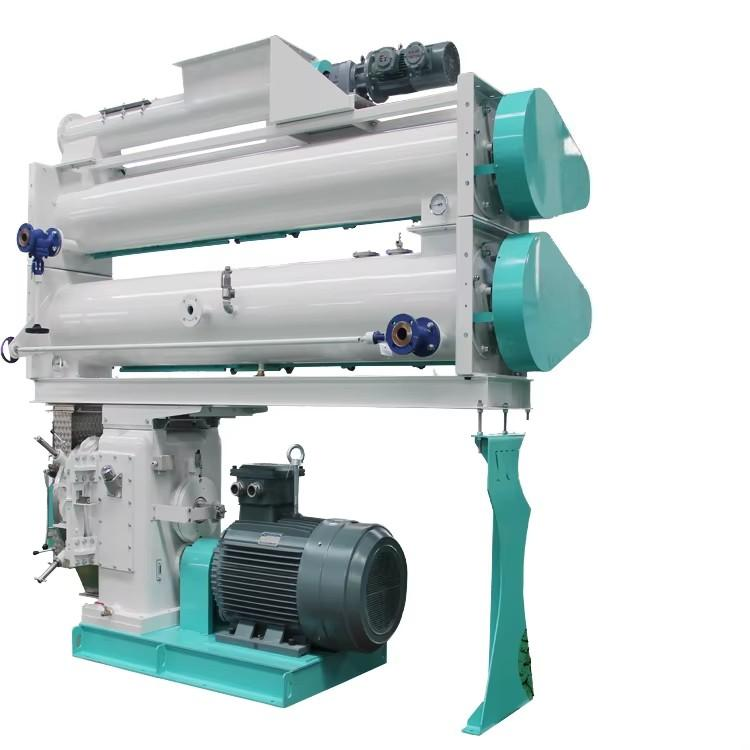
Understanding Granulator Types and Their Fit for Small-to-Medium Feed Production
Disc pelletizers: Low-cost, low-maintenance granulators for <3 TPH operations
Disc pelletizers give smaller feed producers an affordable way to get started with granulation tech. These units handle around 3 tons per hour max and work by spinning a disc that creates pellets through centrifugal force and natural sticking together of materials. The simplicity of the design means they cost about 30 to 40 percent less than other systems that use dies, plus operators don't need much training to run them. Maintenance isn't too bad either - just regular greasing of bearings every three months and sometimes resurfacing the disc when needed. Most places spend under $1,500 a year keeping things running smoothly. They work great for straightforward grain mixes but start showing their limits when dealing with high fiber content stuff since the pellets might come out uneven. For tiny operations making less than 5 tons a day, these machines still produce decent quality pellets while keeping initial investment costs really low.
Flat die granulators: Balanced performance for 3–8 TPH with flexible formulation handling
Flat die granulators work really well for those mid-range operations that need flexibility across different feed types. These machines have vertical dies and a top feeding system that handles anywhere from 3 to 8 tons per hour pretty smoothly. They can manage all sorts of ingredients too, whether it's high protein blends or sticky molasses coated grains that tend to gum things up. What makes these granulators stand out is their modular die setup. Farmers can switch between pellet sizes ranging from 4mm to 8mm in no time flat, so one machine can churn out feed for chickens, pigs, and cows without needing major reconfiguration. According to Feed Tech Quarterly (2023), these units typically eat up about 15 to 20 percent less power compared to ring die alternatives when running at similar capacity levels. That translates into savings of roughly three thousand two hundred dollars each year for every five tons processed. Maintenance isn't too bad either despite needing roller changes twice a year costing around eight hundred to twelve hundred bucks. The good news is that access panels make servicing straightforward enough that most plants only lose about four hours of operation during each service cycle, which matters a lot for smaller farms without full time tech staff on hand.
Ring Die vs. Flat Die Granulators: Performance, Cost, and Operational Trade-offs
When selecting granulators for small-to-medium feed factories, ring die and flat die models present distinct operational trade-offs.
Throughput efficiency and energy consumption comparison
When it comes to throughput, ring die granulators can handle about 15 to 30 percent more material than other types when running continuously at over 8 tons per hour. However these machines do come with a tradeoff as they tend to eat up around 20 to 25 percent extra energy per ton processed. The reason? Their design features rotating cylindrical dies that press materials into uniform shapes, which works great for big batches but not so much for smaller runs. Flat die models take a different approach altogether by compressing material vertically between fixed and moving plates. These systems actually cut energy costs by roughly 30 percent for operations below 5 tons per hour. Why? Because their simpler mechanical movement requires significantly less power typically around 55 to 75 kilowatts compared to the 90 to 110 kilowatts needed for ring dies. Many manufacturers find this makes all the difference when dealing with small batches where formulas get changed frequently, since flat die systems just plain work better in terms of balancing energy usage against output levels.
Footprint, maintenance frequency, and operator skill requirements
Flat die granulators occupy 40% less floor space, with vertical designs averaging 2.5 m², while ring die units require 4–6 m² for horizontal configurations. Maintenance intervals differ significantly:
- Ring die rollers demand bi-weekly calibration and quarterly bearing replacements
- Flat die models need only monthly roller inspections and straightforward die replacements
Operationally, ring die systems require technicians with mechanical troubleshooting skills to manage complex drive trains. Flat die variants support quicker operator training—under 40 hours—due to accessible components and intuitive controls. This reduces staffing costs for facilities with high labor turnover.
Matching Granulator Specifications to Your Production Volume and Feed Formulation
Sizing granulator capacity (TPH) to batch cycle time and daily output targets
Getting the right granulator means matching its throughput capacity (TPH) to what the factory actually needs day to day. Small and medium sized feed operations should figure out their TPH requirements by taking daily production goals and dividing them by how many hours the machine can realistically run each day. Don't forget to account for time spent getting batches ready, doing cleanups, and scheduled maintenance breaks. Machines that are too small will back things up when business picks up, whereas ones that are way too big just burn through extra power and risk breaking down materials faster than necessary. Most experienced operators recommend running equipment somewhere between 70% and 85% of maximum capacity most of the time. This leaves enough breathing room for those busy days without sacrificing pellet quality or pushing the machinery into constant overdrive mode that shortens its lifespan.
Power supply compatibility and motor sizing for stable granulator operation
Before installing any equipment, it's essential to check if the existing electrical system can support what's needed. Generally speaking, three phase power works best for industrial granulators processing over 5 tons per hour, whereas single phase is sufficient enough for the smaller models. When it comes to motor size, getting this right matters a lot for stable operation. Motors that aren't powerful enough tend to struggle with materials containing lots of fiber, which leads to uneven pellets and faster component failure. For regular feed mixes, most operators go with around 15 to 25 kilowatts per ton per hour capacity. But when dealing with denser feeds rich in proteins, expect to need at least 30 kilowatts or more. A good practice is to leave some extra capacity in the system too about 10 to 15 percent beyond what calculations suggest. This helps avoid problems when starting up machinery and gives room for adjustments as formulas change down the road without having to completely overhaul the setup later on.
Material-Driven Granulator Selection: How Ingredient Composition Affects Die Choice and Conditioning
High-fiber, low-binder feeds (e.g., alfalfa, straw blends) and their impact on die wear and throughput
Formulations rich in fiber but low in binders tend to wear down dies faster because of all that friction from abrasive particles, which cuts production throughput somewhere between 15 and 22 percent. Studies show that mixing in about 1% oil as a lubricant helps reduce the resistance between materials and dies, making particles flow smoother during extrusion. When dealing with coarse fiber particles larger than 2mm, the pressure on rollers goes way up, leading to roughly 18% higher energy usage and more powder ending up in the final pellets. On the flip side, when fibers are finely ground, they gelatinize better but need careful moisture management to avoid wasting too much steam during processing.
Sticky or high-moisture materials (e.g., molasses-based diets): Conditioning and granulator design considerations
Feeds that tend to stick together need special treatment to get the right consistency and hold them together properly. When starch starts to gel at around 65 to 85 degrees Celsius, it helps things stick naturally in wet mixtures. But if there's too much fat, say over 3%, the pellets start falling apart. Spraying oil after making the pellets solves this problem though. For machines working with diets full of molasses, they need parts that won't rust easily and should have bigger compression settings, something like 10 to 13 times compression works best for keeping things moving smoothly. Not letting the mixture sit long enough in the conditioning area leads to clumps forming, which puts extra stress on the motors and can actually increase wear and tear by about a quarter or so.
FAQs
What is the maximum capacity for disc pelletizers?
Disc pelletizers can handle around 3 tons per hour and are suitable for small operations.
How do flat die granulators compare to ring die granulators in terms of floor space?
Flat die granulators occupy 40% less floor space compared to ring die granulators.
What are the maintenance requirements for ring die granulators?
Ring die granulators require bi-weekly roller calibration and quarterly bearing replacements.
What is the recommended motor size for processing dense feeds?
For dense feeds rich in proteins, motors of at least 30 kilowatts per ton per hour are recommended.
Table of Contents
- Understanding Granulator Types and Their Fit for Small-to-Medium Feed Production
- Ring Die vs. Flat Die Granulators: Performance, Cost, and Operational Trade-offs
- Matching Granulator Specifications to Your Production Volume and Feed Formulation
- Material-Driven Granulator Selection: How Ingredient Composition Affects Die Choice and Conditioning
- FAQs

