 EN
EN

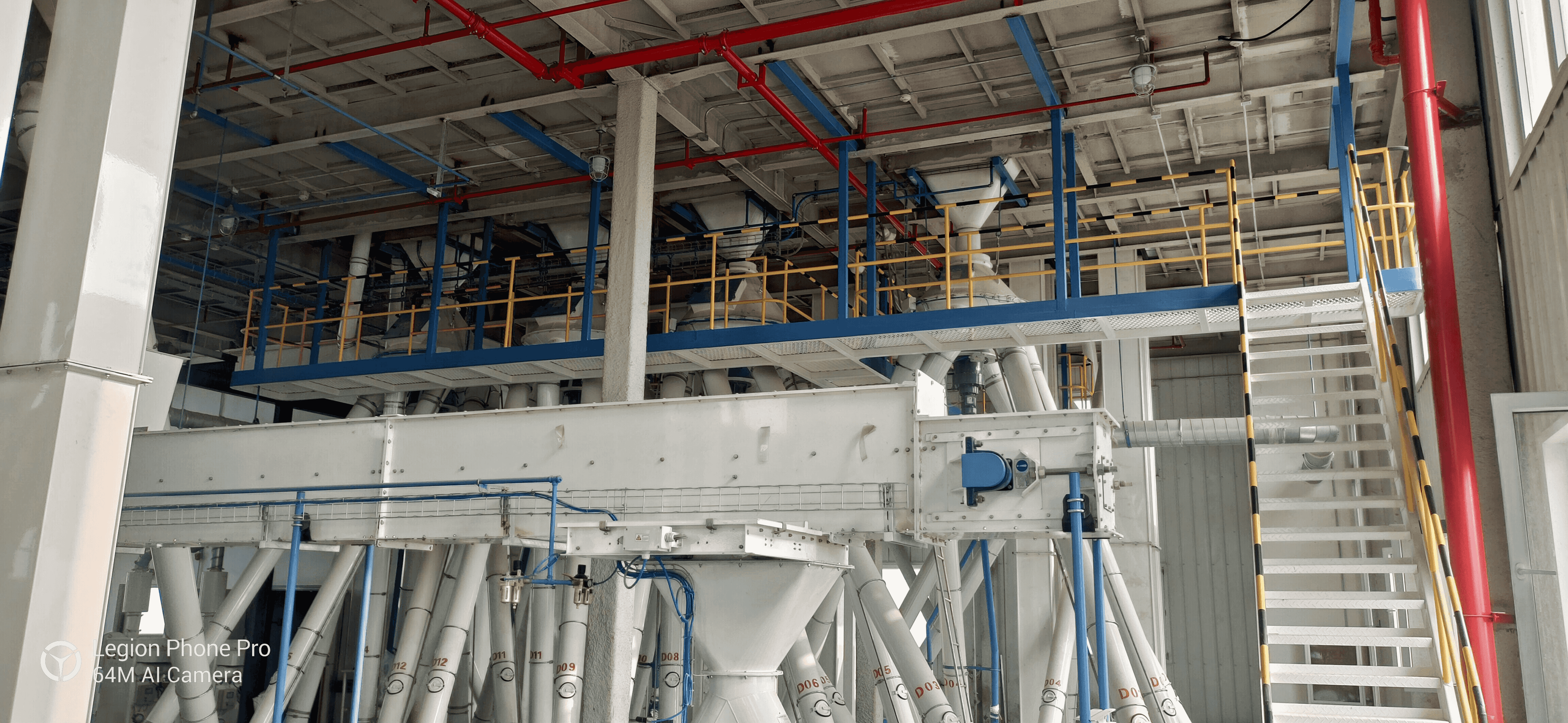
Core Screw Conveyor Design Elements for Stable Material Flow
Flight Geometry: Ribbon, Shaftless, and Tapered Screws for Uniform Mass Flow
The shape and arrangement of flighting plays a major role in how materials behave inside screw conveyors. Ribbon flights work by keeping materials suspended between their blades, which cuts down on compaction issues and stops sticky stuff like polymers from clumping together. When manufacturers go for shaftless designs, they're basically getting rid of that central shaft problem area where bridging happens and dead spots form, especially important for tricky materials like compost or wet sawdust. Tapered screws gradually shrink the space inside the conveyor as material moves along, allowing better control over compression for things like biomass or extruded pellets. Some studies indicate these tapered designs can cut feed rate fluctuations by around 38% compared to regular pitch screws when dealing with mixed materials. What really matters though is how different geometries tackle segregation problems. The ribbon flights stop those tiny particles from migrating too much, while shaftless versions maintain proper mass flow in sticky materials simply because there are no stagnant areas left behind. All this careful engineering means particles travel consistently regardless of their size or density differences.
Pitch Variation and Cone Configurations to Maintain Progressive Feed Consistency
Getting good volumetric control really requires adaptable pitch mechanics rather than relying on fixed geometry alone. The progressive pitch design starts off with tighter spacing near the inlet and then increases as it moves toward the discharge end. What makes this work so well is that it stops surges from happening while keeping pressure stable throughout the system. Plus, operators don't need to constantly adjust things when dealing with different materials. Between each section of the screw there are cone shaped transitions that slowly shrink down the available space, which helps keep everything flowing smoothly even when expanding. This matters a lot for stuff like cement or fly ash powders because if too much air gets mixed in, it creates those annoying pulses everyone hates. Real world tests have shown these progressive pitch systems cut down on feeding problems by around half in conveyor setups angled upwards carrying minerals. Standard pitch systems just can't handle changes in material density very well, but progressive ones naturally spend more time holding onto lighter materials as they come through, maintaining pretty consistent output levels despite all the ups and downs typical in actual operations. Most plants report staying within about 2% variation most of the time.
Operational Parameters That Govern Feed Stability in Screw Conveyors
Screw Speed, Loading Percentage, and Diameter Synergy for Segregation-Free Metering
Stable feeding comes down to how well screw speed (RPM), trough fill level, and auger size work together. When RPM gets too high, it causes fluidization problems that lead to segregation of fine versus coarse materials. On the flip side, if the speed is too low, material tends to build up and stop flowing properly. Most manufacturers following CEMA guidelines suggest keeping trough fill around 30 to 45 percent of capacity. Fill it beyond that and conveying efficiency drops by about 18%, plus flights and troughs wear out faster. There's also an inverse relationship between diameter and speed for maintaining balance. Bigger augers need slower speeds to keep things moving right and avoid particles separating based on size during transport.
| Screw Diameter | Max Recommended RPM | Trough Fill Target |
|---|---|---|
| 9" | 155 RPM | 30–35% |
| 14" | 140 RPM | 35–40% |
| 16" | 130 RPM | 40–45% |
A 15% increase in diameter, for instance, necessitates proportional RPM reduction to retain predictable material motion. When combined with progressive pitch, this synergy reduces feed rate variance to under 2%—even in cohesive, heterogeneous blends like grain or animal feed.
Mechanical Reliability: Alignment, Deflection Control, and Drive Configuration
Minimizing Structural Deflection and Ensuring Axial Alignment Under Load
Axial misalignment—even below 0.05°—generates destructive harmonic forces that accelerate bearing wear by up to 300% and raise motor load by 15%, per industrial vibration studies. Three proven methods ensure long-term alignment integrity:
- Foundation integrity: Equipment must be mounted on rigid, level bases to prevent operational drift; flexible or uneven supports induce cumulative misalignment over time.
- Laser-guided calibration: Verifies coaxial positioning of drive components within 0.1 mm tolerance during commissioning and periodic maintenance.
- Deflection monitoring: Strain gauges integrated into housing detect stress anomalies during material transit—enabling predictive response before clearance loss occurs.
When equipment runs beyond its rated capacity, it leads to structural bending that messes up those important screw-to-trough clearances we usually see between 3 and 6 millimeters. What happens next? Well, leaks start happening, friction losses go up around 22 percent, and our volumetric measurements become unreliable. To fix this over time, engineers often implement things like tapered shaft designs and place additional bearings along the system no more than 3 meters apart. Getting the drive setup right matters too. The reducer needs to line up spot on with whatever power source is driving it because even small misalignments create what's called parasitic torque, which wears out couplings faster than anyone wants. Checking alignment with lasers after every 500 hours of operation cuts down unexpected shutdowns by about 40% in facilities that run continuously. Most modern installations also include thermal expansion compensation built right into their mounting systems, typically allowing for about 1 mm expansion per meter of equipment length. This helps maintain proper clearances despite temperature changes during normal operations.
Integrated Screw Feeder Systems for Precision Feed Delivery
When screw feeder systems integrate volumetric control with what happens downstream, they basically turn regular conveyors into something much more than just moving parts. These setups combine variable frequency drives along with those mass flow hoppers to keep things running pretty consistently within about 2% accuracy. This helps avoid all those annoying pulsations and segregation issues that plague older style batch fed systems. The real magic happens when load sensors kick in and adjust RPM on the fly based on changes in material density. This matters a lot for stuff like hygroscopic powders we see in food processing (think lactose or baking soda) or those tricky granules that pack differently depending on their shape. Getting the feeder discharge directly connected to where the conveyor starts makes sure there's no gap forming between batches, which would mess up the whole flow pattern and ruin accurate measurements. For applications requiring super tight specs, like mixing tablets or handling metal powders used in 3D printing, this setup delivers pharmaceutical level accuracy down to 0.5%. Traditional conveyors just can't handle this kind of responsiveness. Integrated feeders actually listen to what's happening earlier in the process chain and adjust themselves accordingly, so even if moisture levels change or particles vary in size, production stays on track without anyone needing to constantly monitor everything manually.
FAQ Section
Q1: What are the advantages of using shaftless screw conveyors in material handling?
A1: Shaftless screw conveyors eliminate the central shaft, reducing issues like material bridging and dead spots. They are particularly effective for handling sticky or irregular materials such as compost and wet sawdust.
Q2: How does pitch variation improve screw conveyor performance?
A2: Progressive pitch designs enhance the screw conveyor by starting with tighter spacing near the inlet and increasing toward the discharge end. This setup prevents surges and maintains stable pressure, reducing feeding issues by about half.
Q3: What role does screw diameter and RPM play in maintaining feed stability?
A3: Maintaining the correct balance between screw diameter and RPM is crucial for segregation-free metering. Larger augers require slower speeds for effective transportation and to avoid particle separation.

