 EN
EN

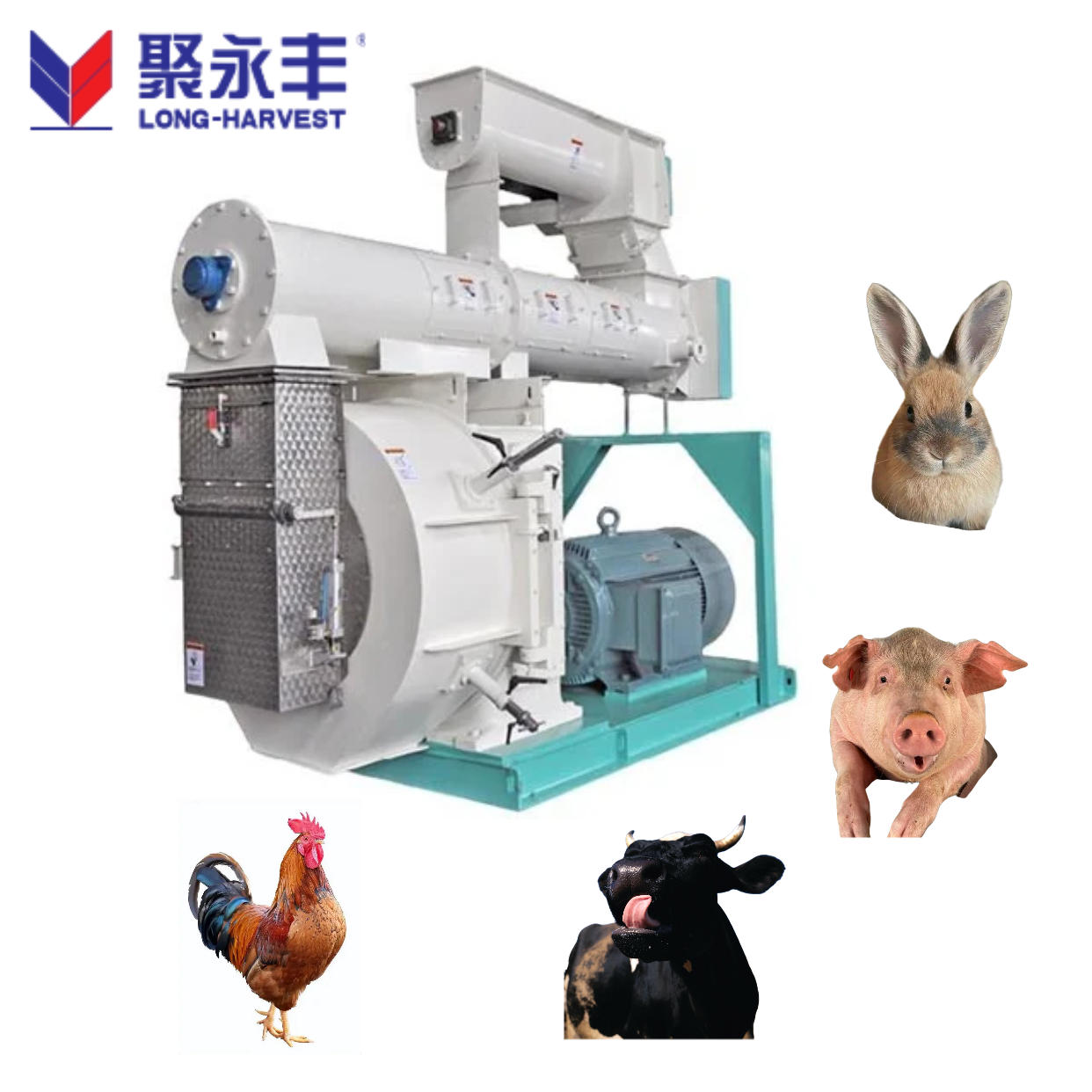
Superior Pellet Quality and Its Impact on Feed Efficiency
How Pellet Quality Influences Feed Production Efficiency and Animal Performance
Better quality pellets actually make animals convert their food into body mass more efficiently because they absorb nutrients better and experience less stomach troubles. When pellets have a consistent shape and size, animals tend to eat them more regularly throughout the day. Research indicates that chickens fed these uniform pellets typically put on weight faster than those given loose feed, sometimes gaining between 8 and 12 percent more over time. The manufacturing process itself becomes more efficient too when pellets are made properly. The right amount of pressure during compression keeps nutrients intact even when heat builds up, so farmers aren't wasting as much energy in production while still getting good results from their feed investments.
Key Factors: Pellet Hardness, Size Consistency, and Structural Integrity
When pellets reach a hardness level over 2.5 kg per square centimeter as tested by the Kahl device, they tend not to break apart when being handled around the facility. Diameter differences below 5 percent are also important because they help maintain consistent feeding throughout operations. For pellets to hold together properly, the raw ingredients need to bind effectively. This mostly happens when starch gets properly gelatinized during processing, ideally reaching at least 60 percent completion. If pellets aren't formed correctly, operators often see problems down the line. Feed waste typically goes up between 15 and 20 percent because small particle buildup clogs feed systems. Many producers have learned this lesson the hard way after dealing with costly inefficiencies from poor pellet quality.
The Role of Steam Conditioning and Moisture Control in Enhancing Pellet Durability
Getting the steam injection right around 3 to 6% moisture makes starch much more pliable, which helps particles stick together better without losing nutritional value. Studies indicate that keeping conditioner temps in the 75 to 85 degree range actually raises the pellet durability index (PDI) by about 22 percent when compared with processing at just 60 degrees. But be careful not to overdo it since this can wreck those heat sensitive vitamins. Finding the sweet spot means getting that PDI boost while still holding onto nearly all of those valuable additives, sometimes as much as 98% depending on conditions.
Data Insight: Correlation Between Pellet Durability Index (PDI) and Reduced Feed Wastage
Looking at 47 feed mills across the industry in 2023 revealed something interesting about PDI scores. Mills with scores above 95% saw their total feed waste drop anywhere from 12 to 18 percent. And this matches what we know from broiler nutrition studies too. When the PDI falls even just 5 points below 90, feed conversion ratios go up by around 1.3%. The really advanced pellet mills manage to hit those high PDI numbers (often over 97) thanks to things like dual stage conditioning systems and constant moisture checks throughout production. For a facility producing 100,000 tons annually, these improvements can save roughly $74k each year in lost feed costs alone.
Increased Feed Efficiency and Lower Feed Conversion Ratios
Linking High-Performance Pellet Mills to Improved Feed Conversion Ratios (FCR)
Pellet mills today are making a real difference in how efficiently livestock convert feed into body mass. When farmers run their raw ingredients through these machines, they get uniform pellets that animals actually digest better. Research shows somewhere around an 8 to 12 percent improvement in feed conversion rates when comparing pellets to loose feed, according to findings published last year in Poultry Science Journal. The main reason? Livestock don't waste as much energy trying to break down this specially processed feed. Plus, there's less picking through the mix since everything is already in consistent form, so animals end up eating what they need instead of selectively choosing parts they prefer.
Optimized Pellet Density and Its Effect on Nutrient Uptake and Growth Rates
Denser pellets (≥650 kg/m³) slow digestion, allowing more complete nutrient absorption. A 2023 trial showed broilers fed high-density pellets achieved 6% higher weight gain with identical feed intake. Precision die configurations in quality mills ensure optimal compression, preventing nutrient loss during processing while maintaining sufficient starch gelatinization for metabolic efficiency.
Case Study: Broiler Farms Achieving 5–7% Better FCR With Ring Die Pellet Mills
A two-year study of 47 poultry operations revealed farms using ring die pellet mills lowered average FCR from 1.65 to 1.53 through:
- 19% fewer fines (<3mm particles)
- 28% lower pellet disintegration during pneumatic transport
- 14% more uniform fat coating distribution
This performance translated to $1.27 saved per bird at market weight—significant in low-margin livestock production.
Reduction in Feed Wastage Through Advanced Pellet Mill Technology
Minimizing Fines and Dust Generation with Precision-Engineered Pellet Mills
Pellet mills today can cut down on fines to under 8%, thanks to better designed dies and more controlled compression methods. Standard equipment typically produces between 15 to 25% fines, which makes these newer models much more efficient. Getting this level of precision really helps maintain consistent pellet density throughout production runs. And let's face it, reducing particulate waste is one of the biggest challenges facing the industry right now. According to some research published last year, cutting fines by just 10% translates into material cost savings somewhere around $2.40 to maybe even $3.10 for every metric ton processed. That might not sound like much at first glance, but when looking at large scale operations, those numbers start adding up pretty quickly.
Impact of Reduced Dust on Feed Safety and Worker Health
Dust levels below 5 mg/m³—achievable with advanced suppression systems—meet OSHA respiratory safety standards and help preserve nutritional quality. High-dust environments increase aflatoxin contamination risk by 40%, according to grain safety research. Lower dust also reduces respiratory issues among workers, who report 30% fewer health problems in well-controlled facilities.
Strategy: Durable Pellets Reduce Spillage During Handling, Storage, and Transport
Pellet durability indexes (PDI) above 95%, common in premium mills, minimize breakage across supply chain stages. In a 12-month trial, such pellets reduced handling losses by 7–12% compared to those below 90 PDI. Operators noted fewer rejected batches when using high-durability pellets, especially under humid conditions.
Ring Die vs Flat Die Pellet Mills: Performance, Scalability, and ROI
Comparative Analysis: Throughput, Energy Efficiency, and Maintenance Needs
When it comes to big scale production runs, ring die pellet mills generally beat out flat die versions, giving about 15 to maybe even 30 percent more output thanks to that full circle compression setup they have going on. The energy numbers tell another story too. Flat dies eat through around 8 to 12 kilowatt hours for each ton processed, while ring dies manage to get away with just 5 to 7 kWh per ton. That kind of efficiency cuts annual power bills down by roughly 40%, which adds up fast over time. Maintenance is where things really start to diverge though. With flat die machines, operators need to tweak those rollers every two weeks and swap out the dies somewhere between 800 and 1,000 operating hours later. Ring die equipment lasts much longer between service calls, often pushing past the 2,500 hour mark before needing attention.
| Factor | Ring Die Pellet Mills | Flat Die Pellet Mills |
|---|---|---|
| Throughput | 10–30 tons/hour | 1–5 tons/hour |
| Energy Efficiency | 5–7 kWh/ton | 8–12 kWh/ton |
| Maintenance Cycle | 2,500+ hours | 800–1,000 hours |
Case Study: Large-Scale Feed Producers Shifting to Ring Die Systems
A 2023 analysis of North American feed mills found that 72% of operators producing over 50,000 tons/year transitioned to ring die systems. One poultry feed facility reported a 19% increase in pellet durability index (PDI) and 12% lower energy costs after upgrading, recovering the $120k investment within 18 months through reduced waste and downtime.
Industry Paradox: Higher Upfront Cost vs Long-Term Return on Investment
Ring die pellet mills definitely come with a higher price tag upfront, costing around 2.3 to 3 times what flat die models do (think $65k to $150k versus just $20k to $45k). But when looking at the bigger picture, these machines last much longer too about 8 to 12 years compared to only 4 to 6 years for flat dies. Plus they run more efficiently which means real money saved over time. For feed mills handling 30 tons or more each day, most find themselves breaking even on this investment within about two and a half years. After that point, operators start seeing nice returns with around 18% to 22% less spending needed on replacement parts and significantly lower electricity bills thanks to better energy consumption rates.
Operational and Safety Benefits of High-Quality Pellet Mills
Improved handling, storage, and reduced segregation with uniform pellets
High-quality pellet mills produce pellets with ≥2% size variation, minimizing ingredient separation during transport and storage. This uniformity enables automated feeding systems to run efficiently, reducing manual labor by up to 15% (Feed Production Quarterly 2023). Dense, intact pellets resist moisture infiltration, making them suitable for bulk silo storage without spoilage risks.
Enhanced feed safety through minimized microbial contamination
Sustained temperatures of 75–85°C in modern pellet mills eliminate 99.3% of Salmonella and E. coli during processing (Journal of Animal Science 2024). Moisture control below 12% inhibits mold growth, while reduced dust improves worker safety—critical given that feed mill personnel exposed to high dust levels experience 30% more respiratory issues annually.
Trend: Integration of real-time monitoring for consistent pellet quality
Leading operations now use IoT-enabled sensors to monitor die temperature, motor torque, and pellet density in real time. These systems enable immediate adjustments to maintain PDI scores above 95%, ensuring compliance with strict feed safety standards. Facilities using monitoring technology report 18% fewer stoppages and 9% higher nutrient retention in finished feed.
These advancements address the $740,000 annual losses linked to poor pellet quality in mid-sized feed mills (Ponemon 2023), positioning modern pellet mill technology as essential for profitable and sustainable feed production.
FAQ Section
What is Pellet Durability Index (PDI)?
PDI is a measure of the structural integrity and robustness of pellets, indicating how well pellets withstand handling and transport without crumbling.
How does steam conditioning affect pellet quality?
Proper steam conditioning enhances the pliability of starch, promoting better particle adherence and nutritional retention, which results in a higher Pellet Durability Index (PDI).
Why are ring die mills preferred over flat die mills?
Ring die mills generally offer better throughput, energy efficiency, and longer maintenance cycles, making them more suitable for large-scale feed production.
How can pellet quality impact feed efficiency?
High-quality pellets promote uniform nutrient intake and weight gain in animals, improving feed conversion ratios and reducing production waste.
Table of Contents
-
Superior Pellet Quality and Its Impact on Feed Efficiency
- How Pellet Quality Influences Feed Production Efficiency and Animal Performance
- Key Factors: Pellet Hardness, Size Consistency, and Structural Integrity
- The Role of Steam Conditioning and Moisture Control in Enhancing Pellet Durability
- Data Insight: Correlation Between Pellet Durability Index (PDI) and Reduced Feed Wastage
- Increased Feed Efficiency and Lower Feed Conversion Ratios
- Reduction in Feed Wastage Through Advanced Pellet Mill Technology
- Operational and Safety Benefits of High-Quality Pellet Mills
- FAQ Section

