 EN
EN

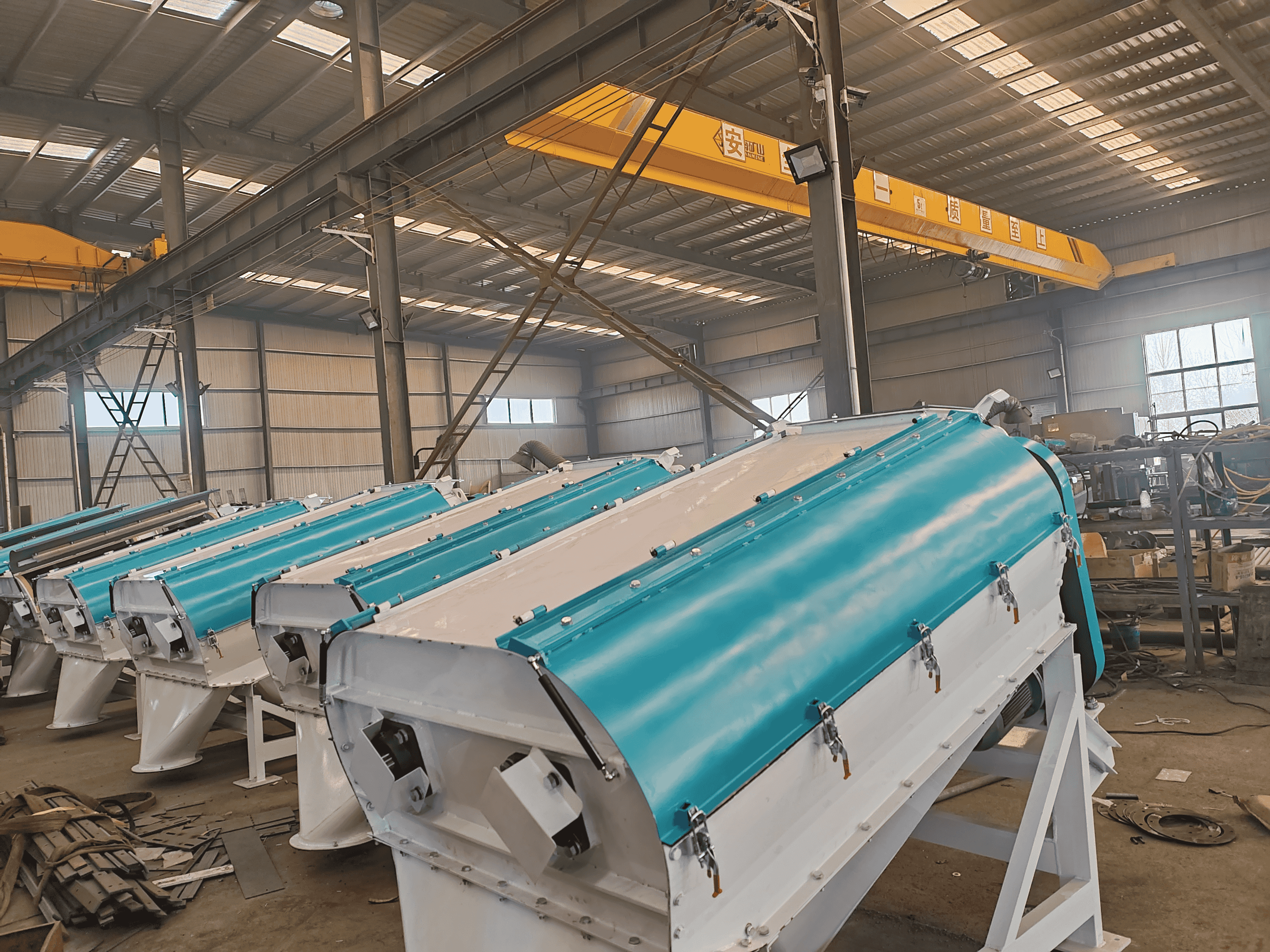
Separation of Light and Heavy Impurities: Husks, Straw, Stones, and Mud
Drum screens work their magic by separating out unwanted stuff based on how different materials behave when things spin around. The lighter stuff like husks and straw basically float up to where they get dumped out because they just don't weigh much. Meanwhile, the heavy bits including stones and mud tend to sink down and find their own exit points through special slots built into the machine. Gravity does most of the dirty work here, and according to some research published last year in Minerals Engineering, these systems knock out about 98.6% of anything bigger than 5mm before it even reaches the next stage of processing. Pretty impressive for something that basically relies on good old fashioned physics.
Working Principle of Trommel Screens in Material Classification
The cylindrical drum spins somewhere between 10 and 20 revolutions per minute, which creates this tumbling effect that actually helps sort out different sized materials. There are holes in the drum too, these perforations can be anywhere from 3 millimeters all the way up to 25 mm across. What happens is the right sized particles fall through those holes while bigger stuff stays behind. When installed at an angle of around 4 to 6 degrees, the whole system works best for moving materials along smoothly. This setup lets factories process up to 120 tons per hour without getting clogged up, something we've seen time and again in real world industrial screening operations across various sectors.
Primary Cleaning Function of Drum Screens in Feed Preprocessing
Drum screens remove 85–92% of foreign matter during initial feed preprocessing, protecting sensitive downstream equipment like grinders and mixers from abrasive damage. DEM simulations confirm that optimized drum inclinations and brush-cleaned punch plates reduce fine particle losses by 37%. This step lowers maintenance costs by $18–$22 per ton in commercial feed mills.
Factors Influencing Drum Screen Efficiency and Output Purity
Impact of Particle Size, Moisture Content, and Material Density on Screening Performance
The efficiency of screening processes depends heavily on two main factors: how the particles are sized and their moisture levels. Research from the industrial sieving field back in 2023 showed these factors explain about 73% of why screening performance varies so much. When materials stay dry with moisture below 12%, they separate pretty well at around 92% efficiency. But things get tricky with stuff like clay that tends to stick together. These materials need screens angled between 15 to 20 degrees to stop them from blocking up the equipment. The actual screen openings also matter a lot depending on what's being processed. Lighter materials such as husks will pass through slots measuring 8 to 15 millimeters, whereas heavier items like stones require bigger holes ranging from 30 to 50 millimeters across.
Residence Time and Throughput Optimization in High-Capacity Operations
The ideal time materials stay inside the drum is somewhere between 45 and 90 seconds. This window keeps things moving at a good pace without sacrificing quality. Some recent analysis showed that when drums are over 300 mm long, there's about an 82% drop in screening mistakes when running at around 25 tons per hour. The reason? Better weight spread across the drum surface. For those looking to get more done in less time, dual speed systems work wonders. They typically run slower between 4 to 8 RPM when dealing with bigger chunks, then crank up to 12-18 RPM for finer materials. This approach increases overall production by roughly 22%, all while keeping product quality above 98.5% pure. Makes sense why so many operations are making this switch these days.
Enhancing Fines Recovery and Overall Material Purity With Precision Screening
Trommels that have multiple decks with gradually decreasing openings from 20 mm down to 5 mm manage to recover around 97% of those tiny but valuable nutritional particles while getting rid of nearly all the bigger stuff, removing about 99.8% of anything over 2 mm in size. The newer polyurethane screens come equipped with these special tapered brushes that really extend their lifespan. Most facilities report needing maintenance only every 650 hours or so, which is roughly triple what we see with old fashioned wire mesh screens. Throw in some real time optical sorting technology and things get even better. We're talking about achieving close to 99.95% purity levels when everything works together properly. This system catches those microscopic bits that regular mechanical screening just can't handle, making it much more effective for high quality end products.
Critical Design Features That Maximize Impurity Removal
Screen aperture size, shape, and placement for targeted particle separation
Efficiency depends on precise aperture geometry tailored to feedstock characteristics. Rectangular slots are ideal for flat impurities like husks, while circular holes better capture spherical debris such as pebbles. Staggered aperture layouts increase material turnover by 18–22% compared to linear patterns, enhancing consistent separation of undersized particles from bulk feeds.
Role of punch plates, brush systems, and drum configuration in self-cleaning and durability
Heavy-duty punch plates (3–5 mm thick) resist wear from abrasive grains rich in silica, while rotating brushes prevent clogging—especially critical when handling high-moisture materials (>14%). Innovations in hygienic design show integrated cleaning systems can cut maintenance downtime by 40% in continuous operations, a significant benefit for 24/7 feed mills.
Tailoring drum screen design to remove oversized contaminants and foreign materials
Tailoring setups helps tackle real world problems like getting rid of metal bits mixed in with grain or cleaning out plastic pieces from recycled materials. When we angle these systems between about 15 to 30 degrees and adjust how fast they spin around somewhere between 8 and 25 revolutions per minute, it creates these nice little waterfalls of material that naturally throw out bigger stuff while keeping almost all the good stuff over 2mm intact. The bonus? Equipment further down the line lasts longer too. Some recent studies show this method cuts wear on those machines by roughly a third, which means fewer breakdowns and less downtime for maintenance crews.
Protecting Downstream Equipment Through Effective Pre-Cleaning
Preventing Mechanical Damage by Removing Stones, Plastics, and Large Debris
Drum screens serve as the first line of defense, filtering out stones, plastics, and other large contaminants before they reach crushers, mixers, or extruders. Facilities processing over 50 tons/hour face up to 28% higher maintenance costs without adequate upstream screening, based on 2023 bulk handling data. These systems prevent:
- Metal-on-rock abrasion in conveyor pulleys
- Jamming risks in pneumatic transfer lines
- Corrosive interactions from residual salt clusters
Reducing Wear and Maintenance Costs in Granular Processing Lines
By eliminating 95–98% of abrasive contaminants early, drum screens significantly extend the life of key components:
| Component | Wear Reduction | Cost Savings |
|---|---|---|
| Grinder blades | 42% | $18k/year |
| Bearing assemblies | 37% | $9k/year |
| Gear reducers | 29% | $7k/year |
This pre-cleaning stage reduces unplanned downtime by 63% in poultry and aquafeed production facilities, according to operational records from 142 plants.
Ensuring Process Continuity and Safety with Reliable Upstream Screening
Trommel screens with automated self-cleaning mechanisms maintain ¥99% uptime in continuous feed production. Their fail-safe operation mitigates risks including:
- Explosion hazards from spark-producing metal fragments
- Cross-contamination between batches
- Emergency shutdowns caused by sifter overloads
Reliability is ensured through three validation steps: real-time debris monitoring, vibration analysis for early bearing wear detection, and quarterly screen integrity audits.
Applications of Drum Screens in Feed Mills and Industrial Processing Plants
Integration of Drum Screens in Feed Mill Pretreatment Workflows
Drum screens are basically the first line of defense in feed mills when it comes to keeping raw grains and legumes free from contaminants. These machines can handle anywhere between 15 to 30 tons per hour, knocking out about 98% of stuff like husks, dust, and other unwanted debris according to last year's Material Processing Report. The perforated rotating drums catch anything too big before it gets to the grinders or pelletizers, which helps avoid breakdowns and keeps everything running within those strict feed safety regulations. Many newer installations now pair drum screens with aspiration units to suck away all that light chaff material, creating what we call a closed loop system that's pretty good at maintaining both cleanliness and operational efficiency across the board.
Use of Rotary Separators and Trommels in Contaminant Removal Across Industries
Trommel screens find applications far beyond just animal feed production, extending into areas like mining operations, recycling centers, and biomass processing plants. The gradient screening tech allows for multiple stages of material separation which is really important for aggregate plants dealing with particles ranging between 0.5mm to 100mm in size. Recycling facilities benefit greatly from these machines too since they come equipped with adjustable openings and cleaning brushes that help recover around 92 percent of valuable metals and plastic waste. What makes trommels stand out compared to traditional flat deck screens is their ability to process wet materials without getting clogged up, something that makes them particularly well suited for composting operations and handling various types of organic waste streams.
Comparison With Other Sieving Technologies
| Feature | Drum Screens | Vibrating Screens | Scalping Screens |
|---|---|---|---|
| Throughput Capacity | 30–500 tph | 20–300 tph | 50–800 tph |
| Optimal Moisture | ¥25% | ¥18% | ¥30% |
| Particle Size Range | 0.2–150 mm | 0.1–50 mm | 10–300 mm |
| Maintenance Interval | 400–600 hrs | 200–300 hrs | 500–800 hrs |
When it comes to handling fibrous stuff like straw or old textiles, drum screens really shine over those vibrating units. We've seen plants cut down on stoppages by around 40% when switching from traditional scalping systems. What makes them stand out? The self cleaning feature works wonders in fertilizer manufacturing where material tends to cake together all the time. And let's not forget about that sealed design which keeps dust levels way down. This matters a lot in food processing areas and pharmacies where even tiny particles can ruin batches or create safety issues for workers.
FAQ
What is the main function of drum screens in feed mills?
Drum screens primarily serve to remove impurities and foreign materials, like stones, husks, and mud, to protect downstream equipment and enhance feed quality.
How do drum screens achieve material separation?
Drum screens utilize centrifugal force and gravity to separate materials based on their weight and size. Lighter materials float to the top, while heavier ones exit through designated slots.
What factors affect the efficiency of drum screens?
Factors such as particle size, moisture content, and material density significantly impact the screening efficiency of drum screens. Proper drum inclination and system configuration also play crucial roles.
Can drum screens be used outside of feed mills?
Yes, drum screens find applications in various industries, including mining, recycling, and biomass processing, for efficient contaminant removal and material separation.
Table of Contents
- Separation of Light and Heavy Impurities: Husks, Straw, Stones, and Mud
- Working Principle of Trommel Screens in Material Classification
- Primary Cleaning Function of Drum Screens in Feed Preprocessing
- Factors Influencing Drum Screen Efficiency and Output Purity
- Critical Design Features That Maximize Impurity Removal
- Protecting Downstream Equipment Through Effective Pre-Cleaning
- Applications of Drum Screens in Feed Mills and Industrial Processing Plants
- Integration of Drum Screens in Feed Mill Pretreatment Workflows
- Use of Rotary Separators and Trommels in Contaminant Removal Across Industries
- Comparison With Other Sieving Technologies
- FAQ

